|
 |
|
Five Informative Half-Day Workshops - Book Your Place Today! At this year's conference we are running five half-day technical workshops. Each workshop will be presented by an industry expert with real world experience, and each workshop has been chosen and structured to provide you with essential knowledge for your future developments of real-time software and embedded systems.
device-developer-conference.co.uk Bristol (20th May), Cambridge (Bar Hill - 22nd May), Manchester (Cheadle - 3rd June) and Scotland (Uphall - 5th June) |
|
EMBEDDED PROGRAMMERS’ GUIDE TO THE ARM CORTEX-M ARCHITECTURE Feabhas have been training embedded software engineers in languages and architectures for the last 15 years. For the last decade they have been using ARM based target systems for all of their programming based courses (C, C++ and testing – ARM7TDMI) and embedded Linux courses (ARM926). However with the development and release of the new generation Cortex micros they are moving their training over to Cortex-M for the languages and Cortex-A for Linux. As part of this exercise they have spent a lot of time getting to know the Cortex microprocessors in detail, looking at different implementations and various support tools and environments. This class looks at all the really useful features added to the Cortex-M that make it a truly excellent target environment for the embedded software engineer. This class will also cover many of the core items required by engineers intending to take exams as a part of the ARM AAME program.
DEVELOPING "CERTIFIED" EMBEDDED SYSTEMSThis self-contained workshop is intended for people who have some experience developing (or managing the development of) embedded systems and who may need to create future products in compliance with one or more international safety standards.
The specific standards discussed in the workshop are as follows:
DEVELOPING FEATURE RICH EMBEDDED GUI's This workshop will show you how to go from "Zero to HMI Hero" in 3 hours. For any engineers currently exploring HMI (human machine interface) or GUI (graphical user interface) or RTOS (Real Time Operating System) technologies, this workshop will be an important opportunity to listen to the experts and get answers to challenging questions from real-world experts.
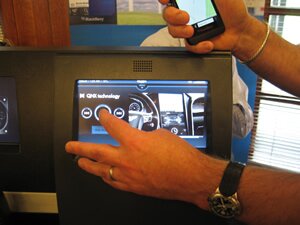
In this workshop, Garry Bleasdale from QNX will take a Freescale i.MX6 reference platform that currently does not have an OS installed. Initially, he will demonstrate and explain how to take a Board Support Package (BSP) and create a basic bootable operating system image and boot the board. He will then go on to show how to add additional functionality such as SD card interface, networking and Qt HMI capability, both dynamically and as part of the bootable image, and mechanisms put in place to restart these software services should there be a failure or unexpected event. The workshop will then hand over the platform to an engineer from KDAB, will show how to deploy Qt 5 to the target and set up the host environment ready to develop with Qt 5 on QNX. The presenter will then develop a small HMI application using C++ for a robust backend and Qt Quick 2 (QML) technology for the GUI. Qt Quick 2 provides a very simple and elegant way to harness the power of the GPU and OpenGL in order to provide silky smooth user experience (UX) demanded in today's devices. Attendees will learn many facets of the Qt environment and the use of tools to show the speed and simplicity of development using this technology stack.
A GUIDE TO ADVANCED DEBUGGING As code has become more complex, and is running at ever faster speeds - more is being expected and demanded of debug tools. Not only do they need to find bugs, but more often, they need to be able to 'prove the behaviour' of the software under development. This hands-on workshop will provide attendees with an overview of some of the software analysis techniques needed to ensure your code meets specifications such as ISO26262, DO178C and IEC62304. The workshop will work through examples of code coverage using data generated in real time by the target core without instrumenting the code. An analysis of code performance and timing will then be undertaken, including best and worst case response times as well time spent on external events. Along with numerous other detailed analysis options, the above data will then be exported to provide documentary proof of the code performance
This workshop will be presented by Richard Copeman, Technical Manager at Lauterbach (UK) Ltd
Getting to Grips with the new MISRA C:2012 Standard Developers concerned with improving software quality should work to a coding standard. And the dominant international basis for creating coding standards for the C language is the MISRA C guidelines. The latest version, MISRA C:2012, has drawn on experience in a wide range of environments to improve MISRA C still further.
This workshop will look at the whole standard, discuss the underlying approach and examine how software developers whether working the systems they are working on are safety-critical or not, can use the MISRA guidelines to improve software quality. The presentations are based on deep understanding of the standard and the problems of software development This workshop will provide delegates with a good understanding of why they should be using coding standards, how adopting MISRA C:2012 will help in creating a set of coding standards and how tools are available, that not only help enforce coding standards, but will also make it possible to produce better quality code generally and improve the management of the development process.
Four Locations - It's free, but places are limited - Click here to register today! As before, attendance at the Conference, including the agenda of technical presentations is free, although there is a £75+VAT charge for each half-day workshops. Visit device-developer-conference.co.uk for more information. Please feel free to share this information with friends and colleagues - we would welcome your help in spreading the word. Simply reply to this e-mail to let us know if you do not wish to receive further updates on this event. |
 |